All systems operational · 40+ PoPsHosting since 2010
INTERKVM HOST SRL·AS 25198
Home/Blog
Engineering notes from the people running the network

The ZetServers blog.

Hosting, bandwidth and network engineering written by the team that operates AS 25198 — unmetered capacity, peering, storage and the trade-offs behind them.

Posts
52
Topics
7
Written by
ZetServers engineers

How to choose a DDoS protected VPS that stays up under attack

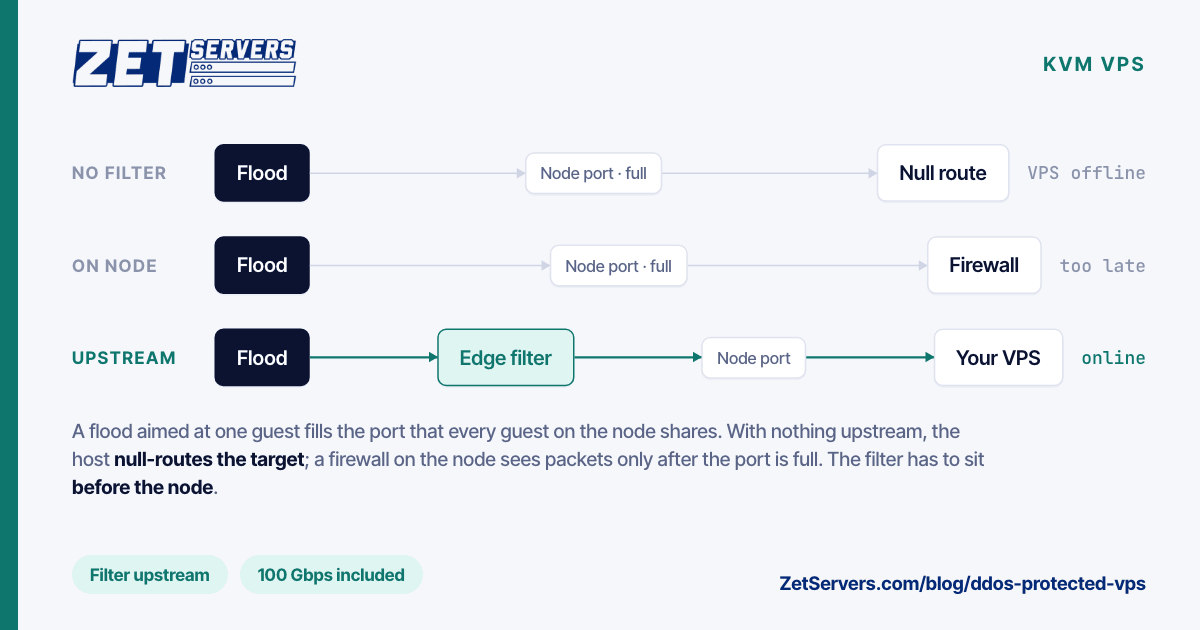
Why a flood aimed at one VPS is a flood at every guest on its node, why budget hosts answer with a null route, what DDoS protection has to mean on a VPS, what the guest still handles itself, the questions to ask a host, and when a protected VPS is enough or a dedicated server is the better buy.

·Guides

Null routing: why your host blackholes your IP in a DDoS attack

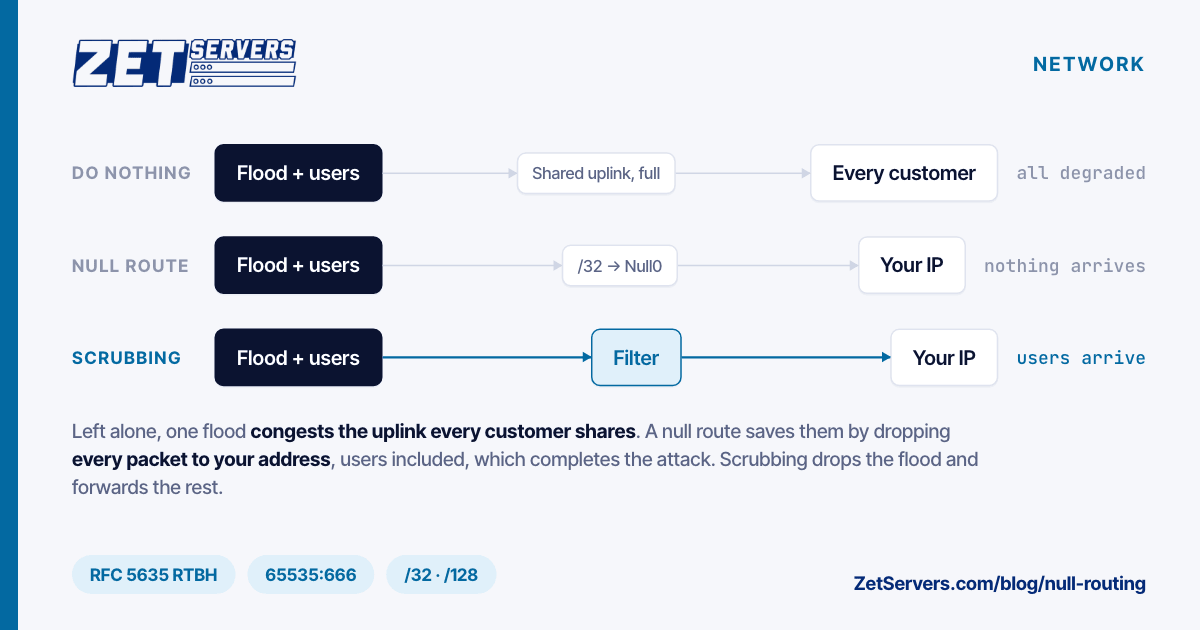
When a DDoS attack is bigger than the links it arrives on, hosts null-route the target: every packet to that IP is dropped, legitimate users included. How RTBH (RFC 5635) and the BLACKHOLE community 65535:666 (RFC 7999) work, how to spot one with mtr, and what to ask your host.

·Network

Types of DDoS attacks: what each one exhausts and what stops it

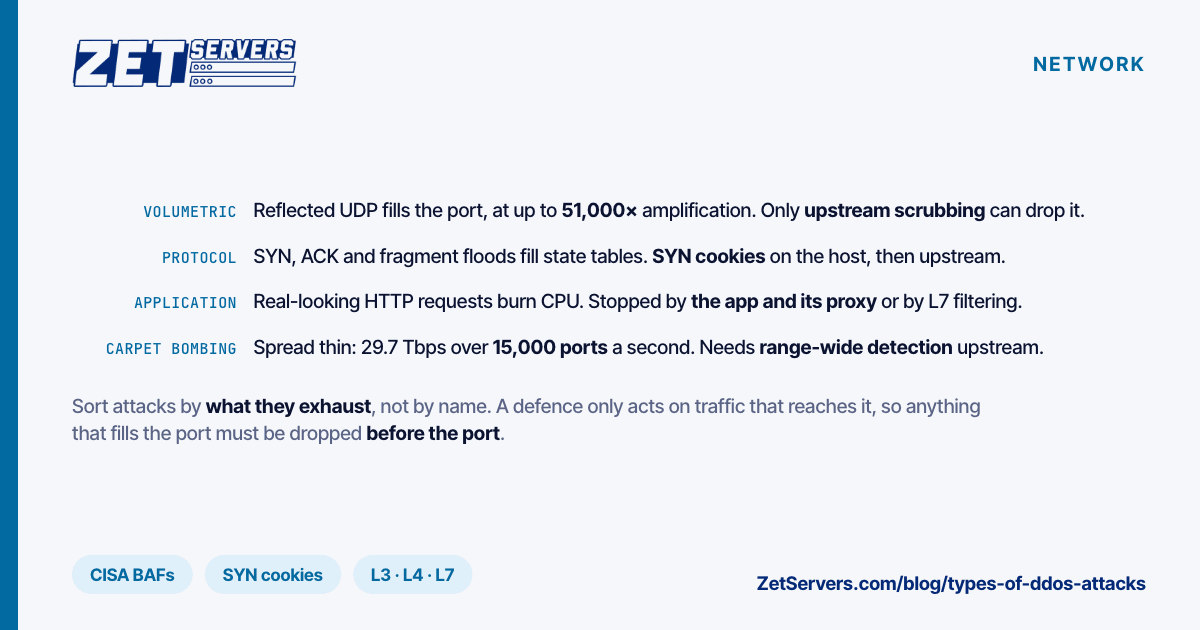
Volumetric floods fill the port, SYN and ACK floods fill state tables, HTTP floods burn application CPU and carpet bombing hides under per-host alarms. A taxonomy by layer, with CISA's amplification factors, Cloudflare's 2025 attack data and the layer of defence that stops each family.

·Network

How to run your own authoritative DNS server on small VPSes

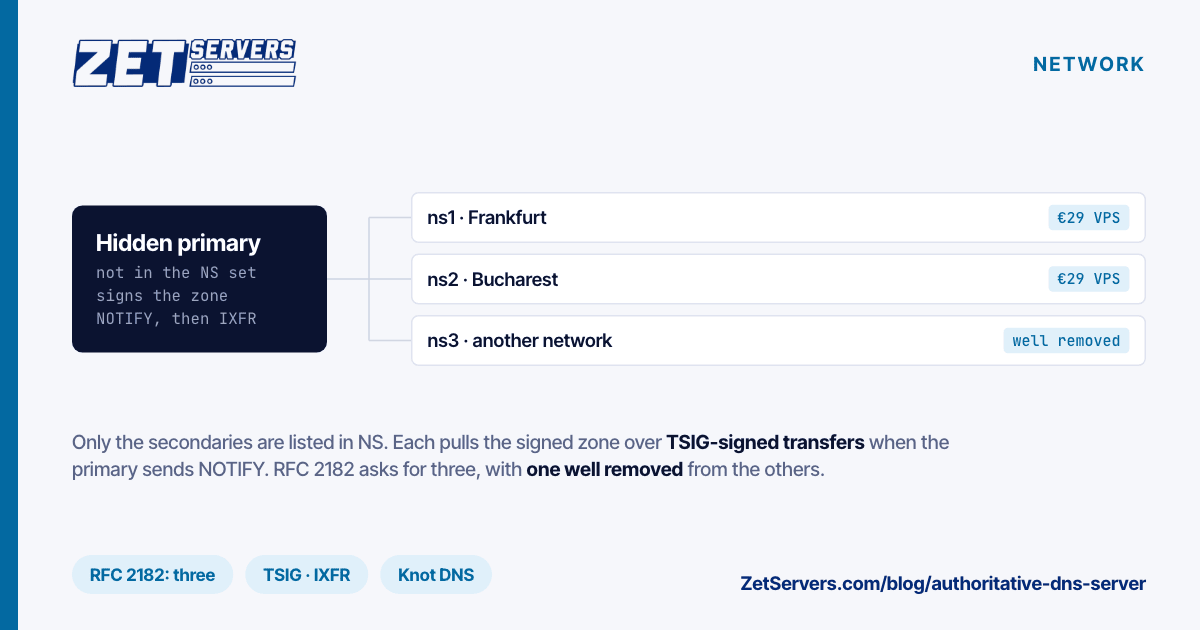
A hidden primary, three secondaries in different cities and networks, TSIG-signed NOTIFY and zone transfers, a working Knot DNS config with automatic DNSSEC signing, and the dig commands that prove an authoritative DNS server answers correctly. Plus what it costs and when managed DNS wins.

·Network

Data center tiers: what Tier I to IV mean, and what they leave out

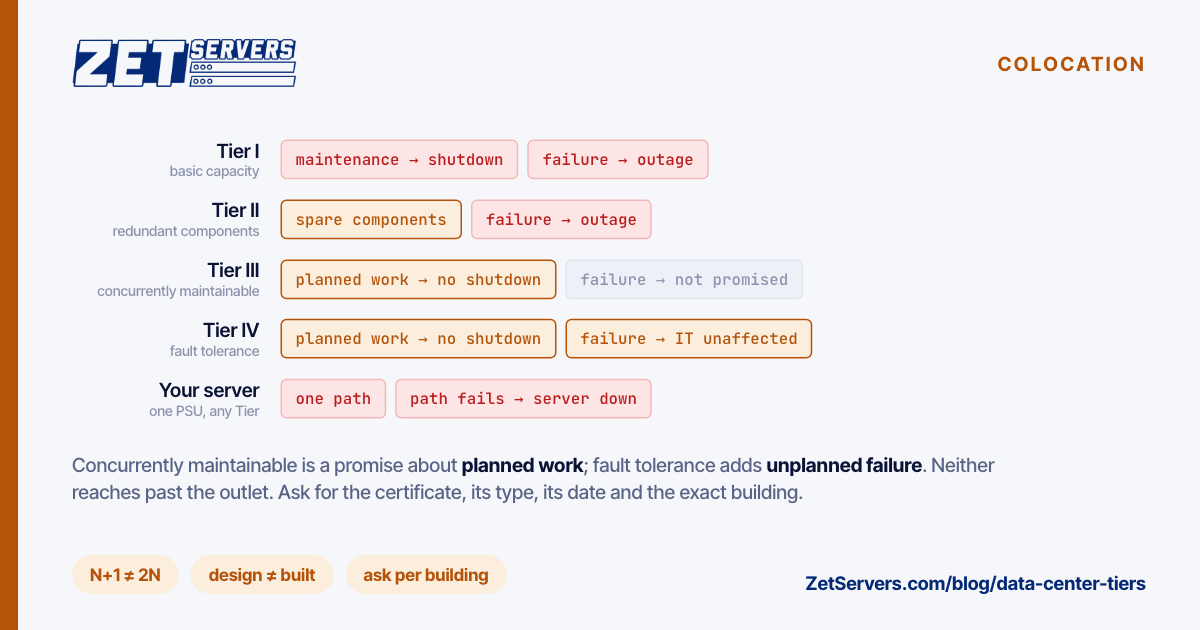
Tier III and Tier IV describe how a building's power and cooling behave during maintenance and failure, not whether your servers stay online. What each Tier means in Uptime Institute's wording, N+1 and 2N in one example, design versus facility certificates, TIA-942, and four questions that verify a claim.

·Colocation

Dedicated server monitoring: what to watch and a minimal stack

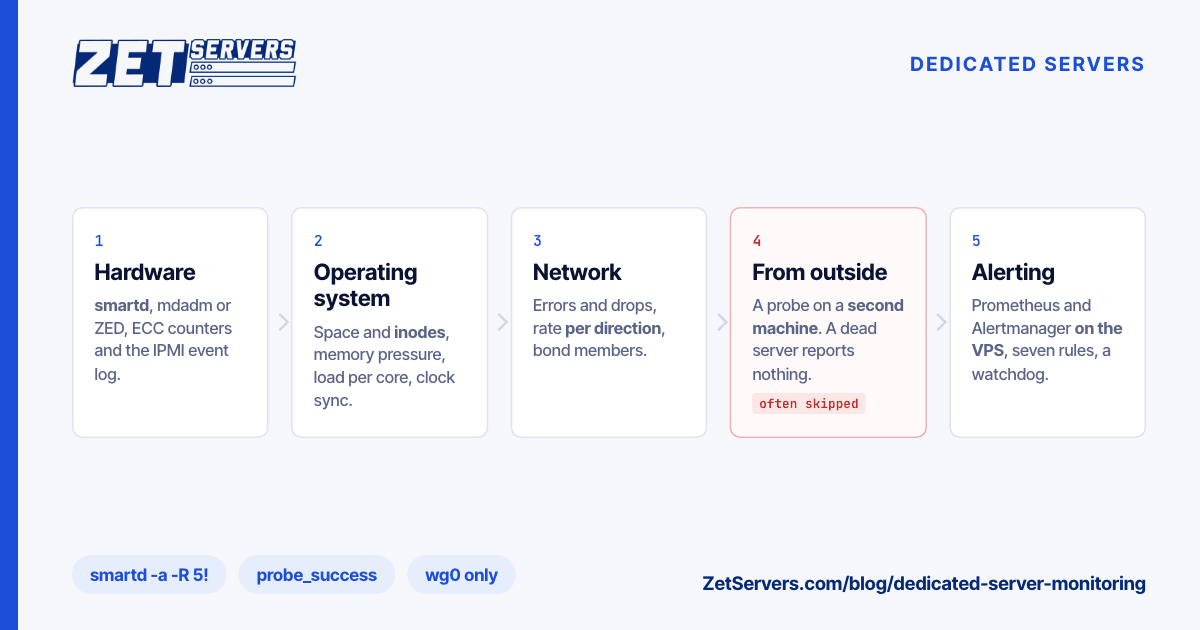
Nobody watches the hardware of a dedicated server for you. What to monitor in five layers: disks, RAID, ECC memory and IPMI sensors; space, memory, load and clock; interface errors and bond members; the service from a second location; and a minimal Prometheus and Alertmanager stack with seven alert rules.

·Dedicated Servers

Plex server hosting: run Plex or Jellyfin in a data centre, not at home

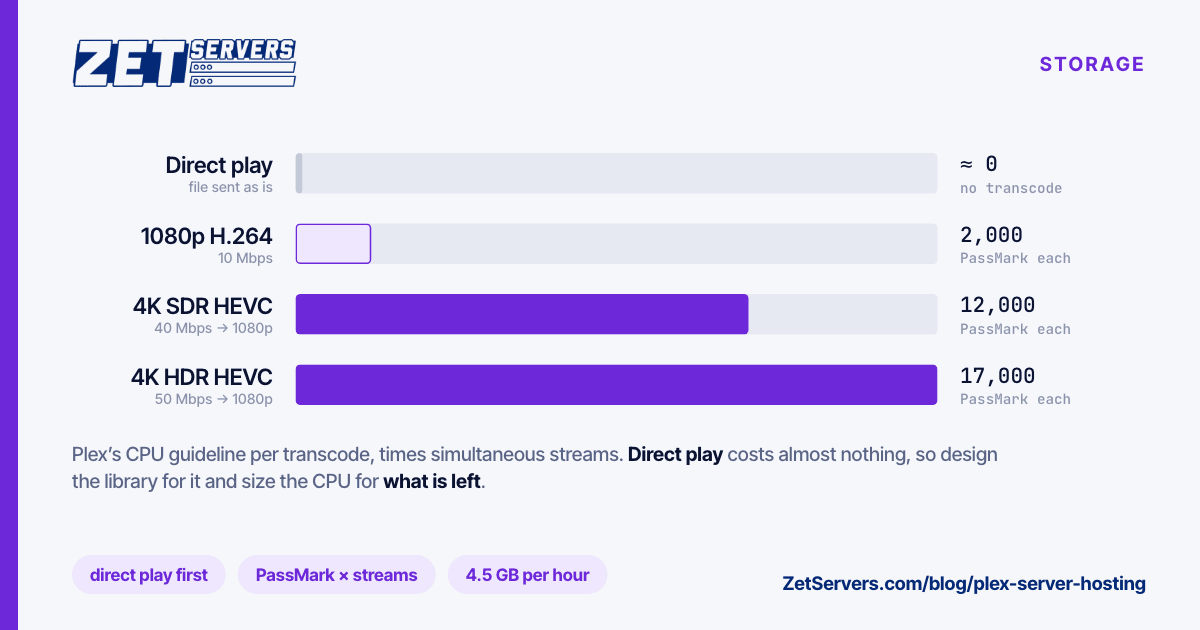
A home connection uploads a fraction of what it downloads, and every remote Plex stream leaves through that upload. Why a data-centre port fixes it, why to design for direct play, Plex's PassMark guide to CPU sizing, the GPU and pass catch on hardware transcoding, remote streaming rules and how far 72 TB goes.

·Storage

Minecraft server hosting: VPS or dedicated, sized by what players do

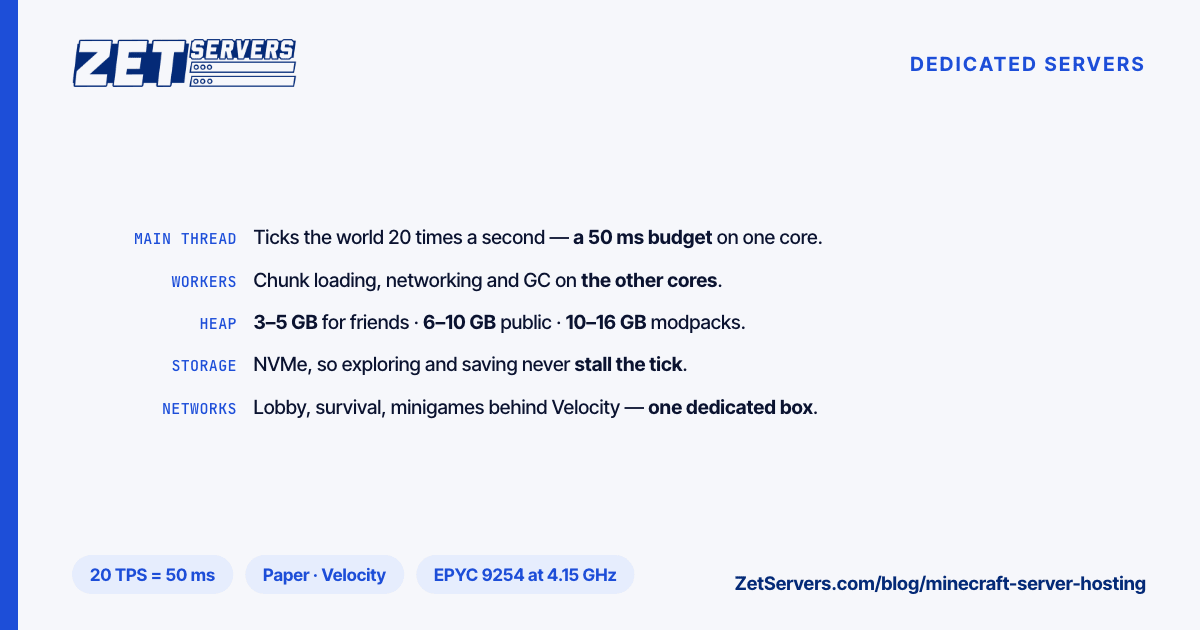
A Java Edition server runs its world on one thread with a 50 ms budget per tick, so clock speed matters more than core count. What the server uses, Java against Bedrock, which server software to run, sizing by players, three settings that beat new hardware, and when a VPS gives way to a dedicated machine.

·Guides
Tweaksv1
Theme