All systems operational · 40+ PoPsHosting since 2010
INTERKVM HOST SRL·AS 25198
Home/Blog
Engineering notes from the people running the network

The ZetServers blog.

Hosting, bandwidth and network engineering written by the team that operates AS 25198 — unmetered capacity, peering, storage and the trade-offs behind them.

Posts
35
Topics
7
Written by
ZetServers engineers

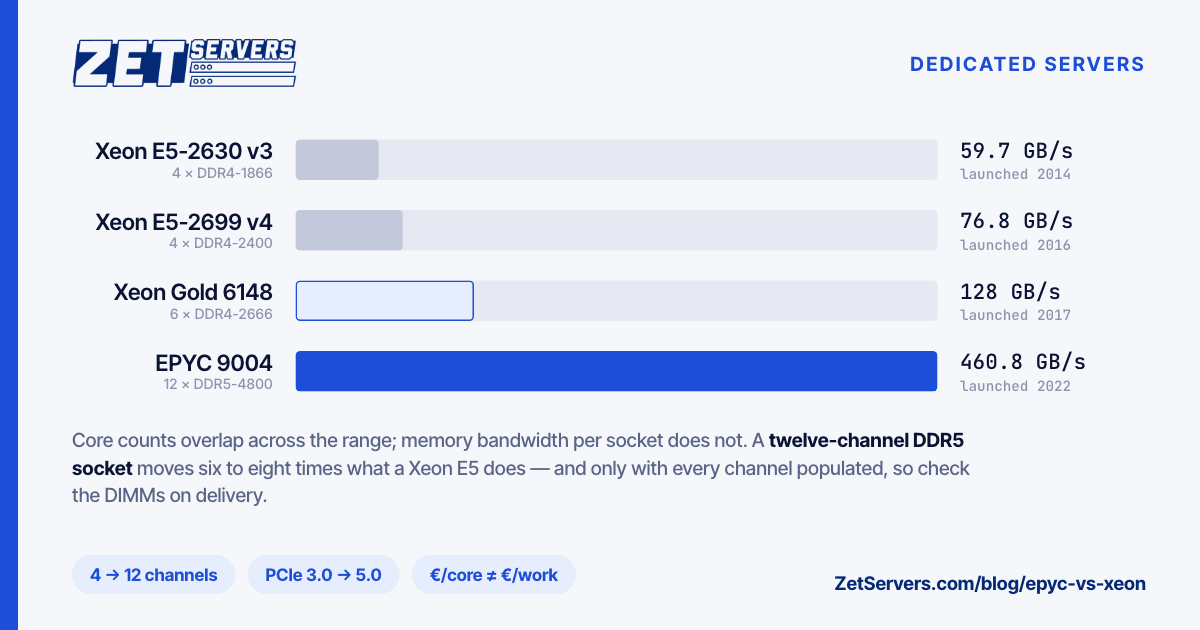
EPYC vs Xeon: choosing the CPU in a dedicated server

What you can rent is not this year's Xeon against this year's EPYC but an eight-year spread of generations at prices seven times apart. Per-core speed, memory bandwidth, PCIe lanes and price per core — and which of those differences your workload can actually feel.

·Dedicated Servers

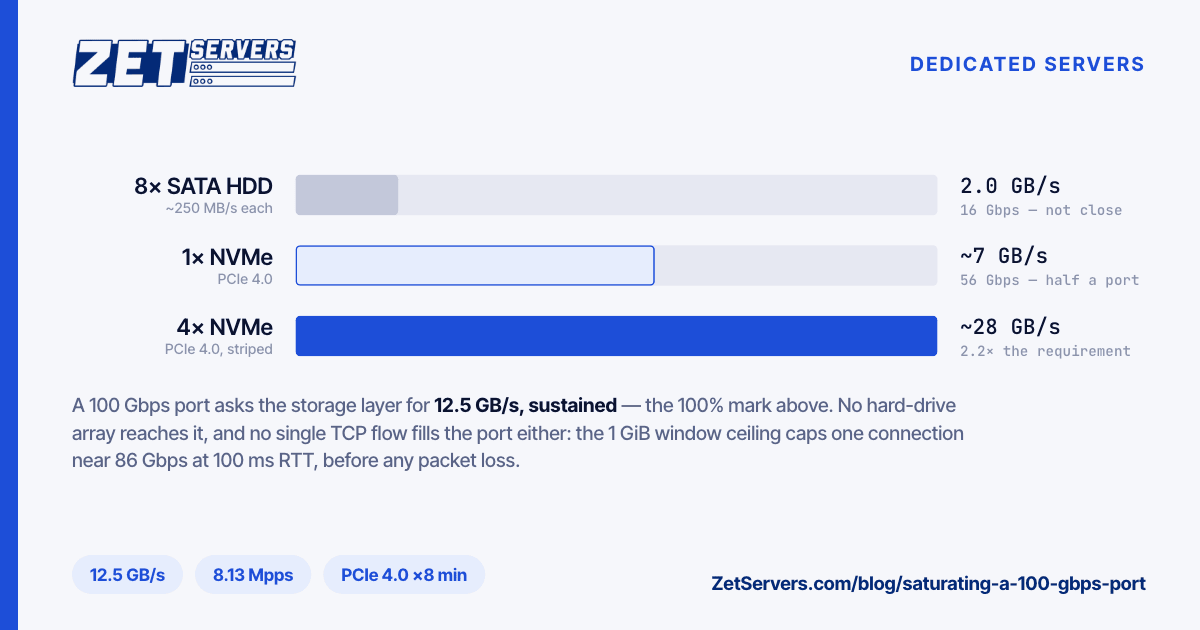
Saturating a 100 Gbps port: what has to be true first

The port is the easy part — it is lit in an afternoon. Then the machine behind it has to produce 12.5 gigabytes every second, and each layer between the disk and the wire gets a chance to be the reason it does not. The arithmetic, in the order it fails.

·Network

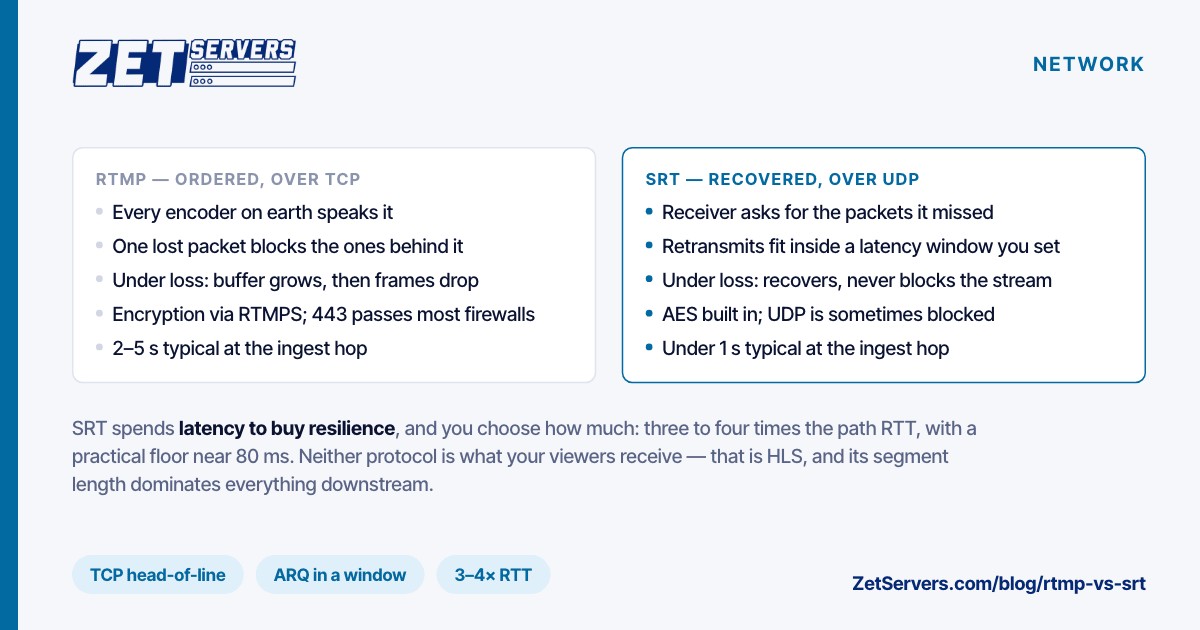
RTMP vs SRT: picking a contribution protocol for live video

Both protocols get video from an encoder into your origin; neither is what viewers receive. Judged on that one job, they differ sharply under packet loss — and the SRT latency setting decides whether it helps at all. A comparison, with the pipeline around it.

·Guides

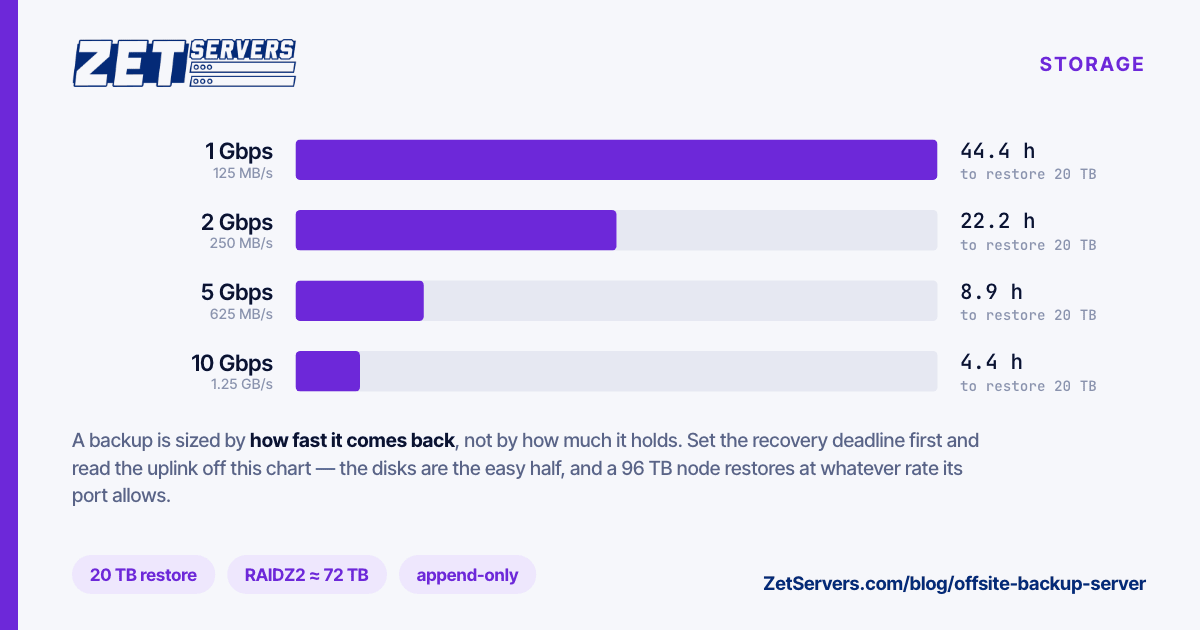
The offsite backup server, sized by restore time

Capacity is the easy half of a backup. What decides whether it is worth having is how long the restore takes, whether anyone verified the archive, and whether an attacker holding your production credentials can also delete the backups.

·Storage

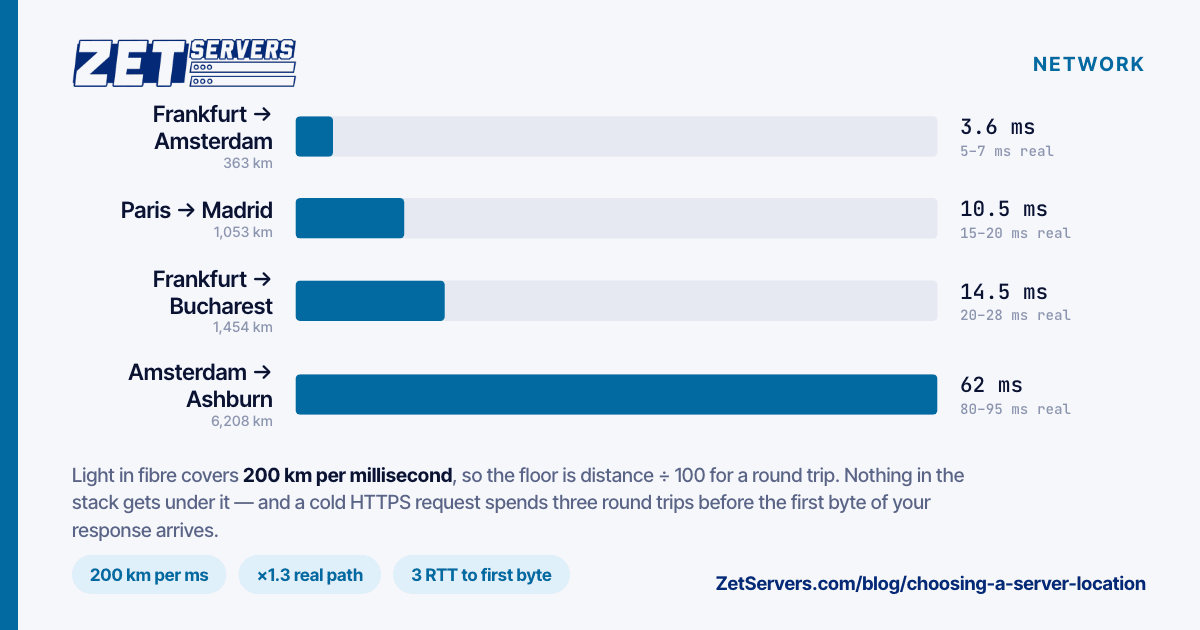
Choosing a server location: latency, law and interconnection

Kernel settings are changeable; the distance between your server and your users is physics. Work out the latency floor from the map, understand why interconnection decides how close you get to it, and test from where the users actually are before committing.

·Network

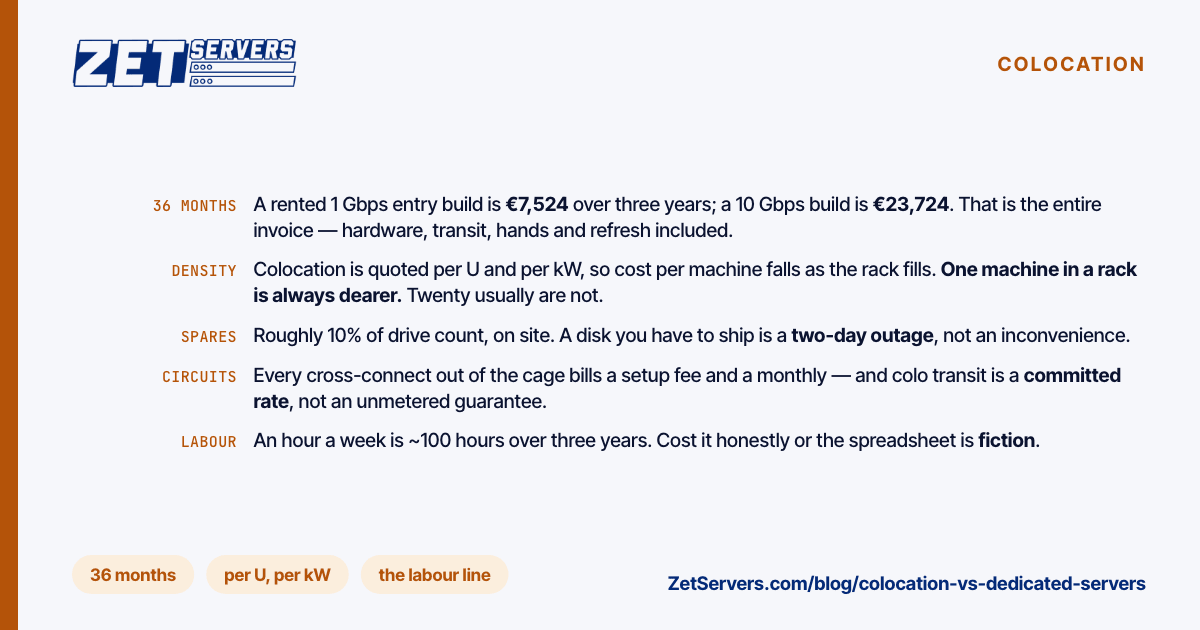
Colocation vs dedicated servers: finding the breakeven

Renting turns hardware into a monthly line item; colocating turns it back into an asset with jobs attached. The technical difference is small, the financial one decides everything. Build both sides over three years — and cost your own engineer's time honestly.

·Colocation

Seedbox vs dedicated server: a slot, or the whole machine

A shared slot and a dedicated node can cost the same per terabyte and behave nothing alike. Contended random IO, fair-use ceilings and shared address reputation are what separate them — along with everything a slot simply cannot run.

·Storage
Tweaksv1
Theme